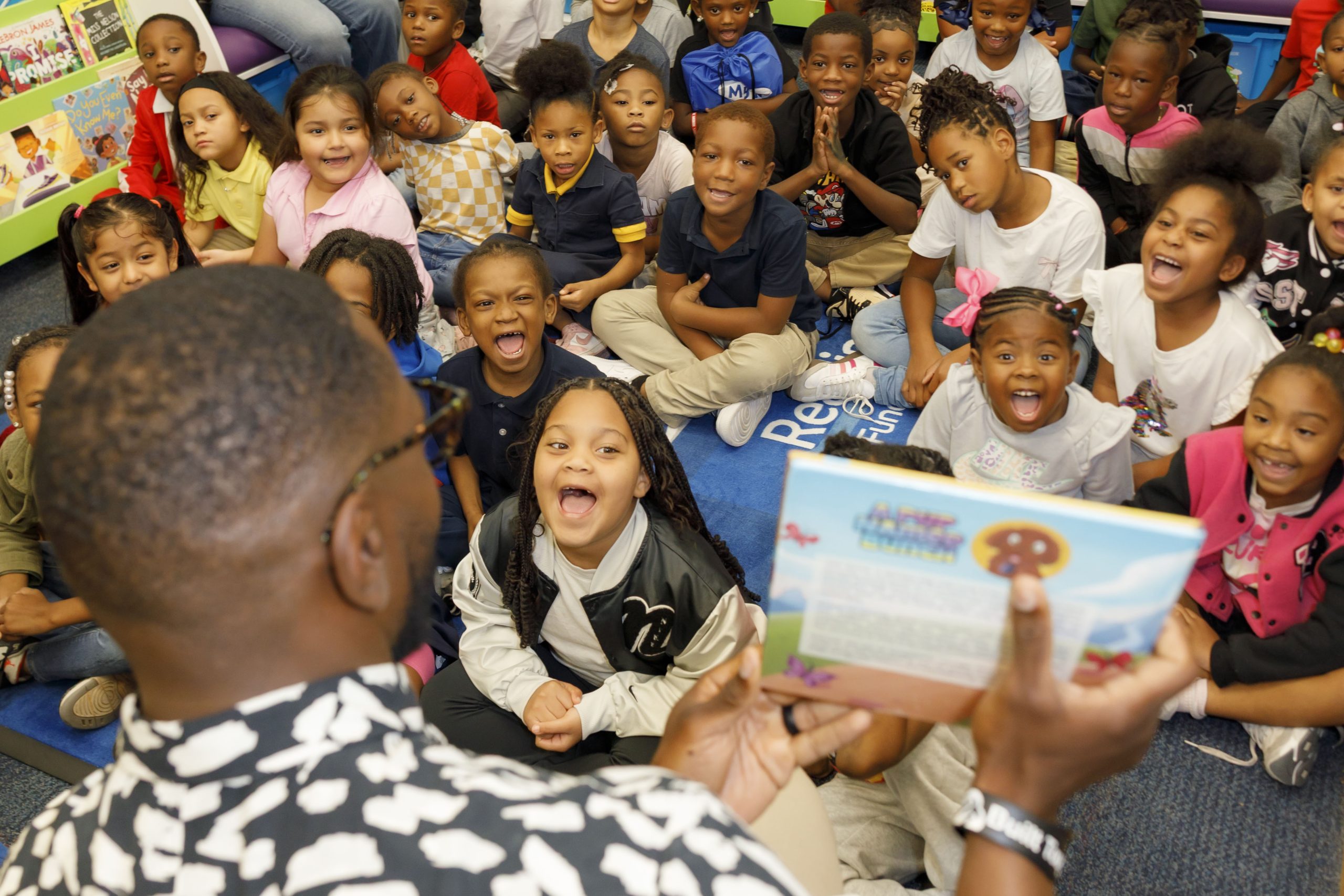
A read-aloud is simply the act of reading a book out loud with a child, whether that child is following along, looking at the pictures, or just listening. It can happen anywhere, on a lap before bed, at a classroom rug during story time, or in the car with an audiobook, but the read-alouds that build the most skills happen when the adult and child talk together about the story, not just read the words on the page. Rally to Read, Reading Is Fundamental's nationwide initiative, makes this easy by offering two free read-aloud videos every month from October through March, giving families and educators a ready-made way to build this habit together.
What Are the Benefits of a Read-Aloud?
The benefits of a read-aloud fall into three main areas: language growth, physical modeling, and emotional connection. Each one plays a different role in helping a child grow into a confident reader.
1. Language Growth
The language benefits of a read-aloud are the easiest to measure. Children who are read to daily hear far more words over the course of a year than children who are read to less often, and that gap in word exposure only grows as children get older. Every new word a child hears in a story becomes a building block for later reading comprehension, since understanding a written word is much easier when a child has already heard it spoken aloud.
2. Physical Modeling
Read-alouds also offer a physical benefit that is easy to overlook. When a child sits close enough to see an adult's face while reading, they are not only hearing new words, they are watching how those words are formed. Seeing the shape of a mouth as it makes a certain sound helps a child learn to form that sound themselves, which builds a foundation for both spoken language and early reading skills. This is one reason why sitting face-to-face, rather than side-by-side, can make such a difference during a read-aloud.
3. Emotional Connection
Finally, read-alouds build an emotional connection between a child and the adult reading to them. Story time is often a rare pocket of quiet, focused attention in a busy day, and that closeness matters. Research has even found that hearing a story can raise levels of oxytocin, a hormone linked to feelings of calm and connection, in young children. This means that even before a child understands every word in a book, a read-aloud is already teaching them that reading is safe, warm, and enjoyable, which is often the biggest predictor of whether a child will want to pick up a book on their own.
Together, these three benefits explain why read-alouds remain one of the most effective tools families and teachers have, even in a world full of screens. As RIF’s own Dr. Erin Bailey wrote in Why I Read Aloud to my Children (and Think You Should Too), even three readings of the same book in one morning are still worth it, because a child who closes the book and runs off will likely be back tomorrow asking for the very same story.
Bring Read-Alouds Into Your Home or Classroom
Building a read-aloud habit does not require a long list of books or a strict schedule. It simply requires a few minutes, a book, and a willingness to talk about what is happening on the page. Rally to Read makes this even easier with two free read-aloud videos released every month from October through March, each one ready to watch together as a family or share with a classroom. Explore this month’s Rally to Read theme to find a read-aloud video and start building this habit today.